Marjory Stephenson (1885-1948)
Reproduced by kind permission of the Royal Society of Chemistry - Ref: Marelene and Geoffrey Rayner-Canham, Chemistry in Britain, 35, 1, p.48 |
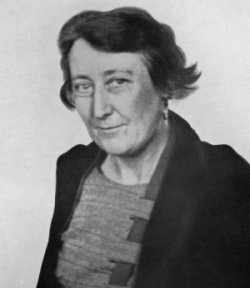
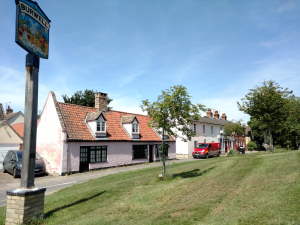
Of all of 'Hoppy's' (Frederick Gowland Hopkins) ladies, Marjory Stephenson is most deserving of recognition. The biochemical historian, Robert Kohler, showed that the field of bacterial biochemistry was, in large part, defined by Stephenson's work. (R. E. Kohler, Isis 1985, 76, 162). She was born on 24 January 1885 at Burwell, a village near Cambridge, and it was at Cambridge that she was to spend most of her life.
Stephenson attended Newnham from 1903 until 1906. After leaving Newnham she would have liked to have studied medicine, but lacking the financial resources, took teaching positions in domestic and household science for the next five years. Her first saviour was R. A. Plimmer at University College, London, who invited her in 1911 to teach advanced classes in the biochemistry of nutrition and to join his research group. As a result of her research on fat metabolism and on diabetes, Stephenson was awarded a Beit memorial fellowship in 1913. However, she relinquished the fellowship on the outbreak of war, running soup kitchens in France and then supervising a nurses' convalescent home in Salonika. She was awarded an MBE for her war work. In 1919, she took up her Beit fellowship again, moving to Cambridge to work with the greatest influence on her career, Hopkins. After the expiry of the fellowship, she worked on annual grants from the Medical Research Council until 1929 when she received a permanent post.
It was Hopkins who encouraged Stephenson to develop her own interests and she chose chemical microbiology. Stephenson was the first to separate a pure cell-free enzyme from bacteria - lactic dehydrogenase from E. coli. Next, with Leonard Stickland, she characterised the enzyme hydrogenase from bacteria, showing that bacteria used hydrogenase to produce methane and hydrogen sulphide. Next, she studied adaptive enzymes - enzymes that are not needed under normal conditions, but synthesised by bacteria in response to some external influence, such as a change in the growth medium. Her research work culminated in her book Bacterial metabolism, first published in 1929. The book was highly regarded, with a second edition published in 1938 and a third in 1949, with a paperback reprint appearing in 1966. Among the many honours for her role as a founder of bacterial chemistry was election in 1945 as one of the first two woman fellows of the Royal Society. She remained single, dying on 12 December 1948.
Obituary Notice in PDF
© Copyright The Royal Society of Chemistry, 1999. All rights reserved.


Dan's Challenge



























































T4
Burwell <=> Addenbrookes
T4 Timetable
T5
Cambridge <=> Burwell <=> Soham Train Station
T5 Timetable
T4 and T5
Replace No.11
All Tiger Bus Routes
Soham To Ely Trains
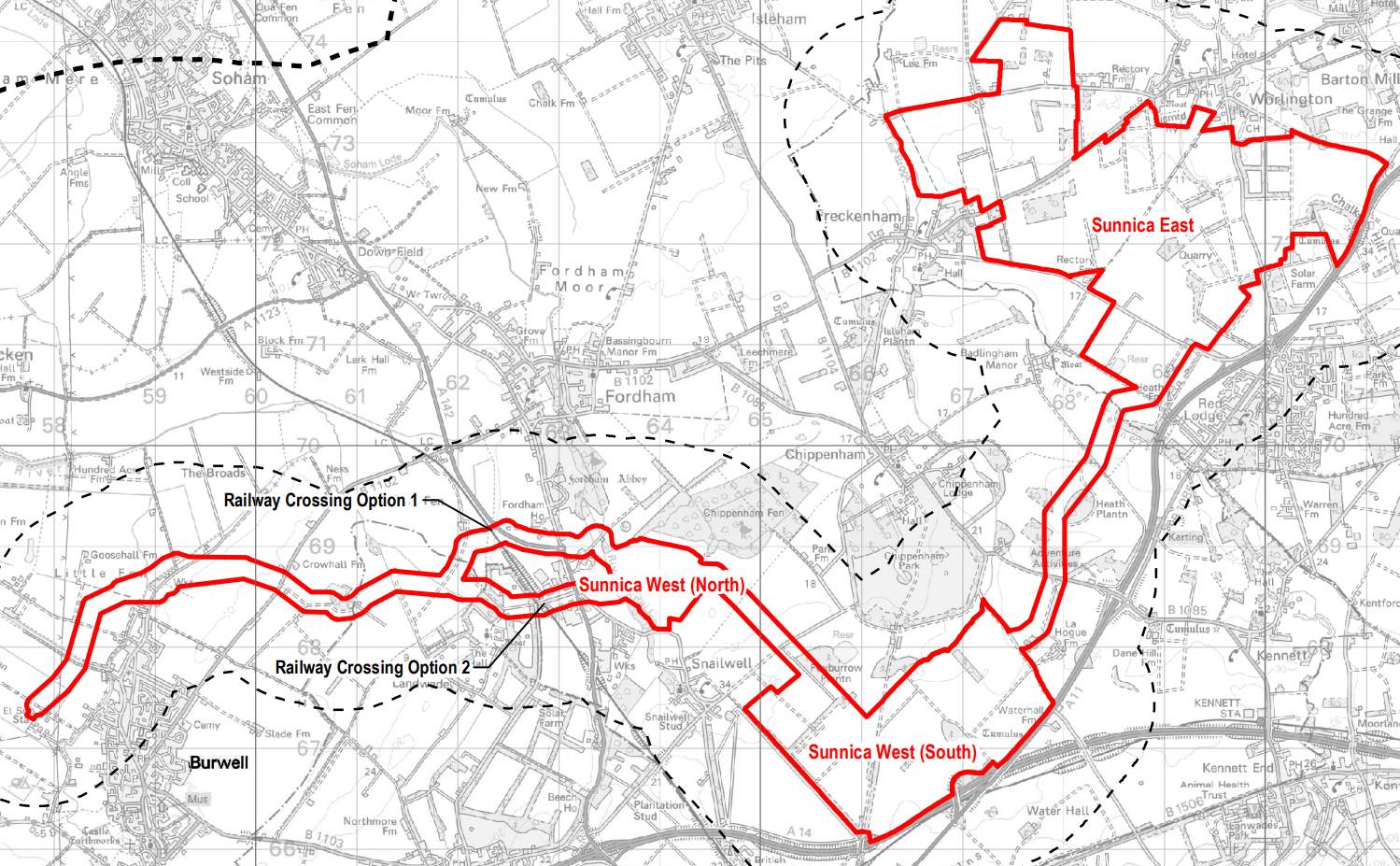
Latest Proposals
Project and
Current Status
(350 new homes)
Linden Homes
Web Site
Planning Docs
This Land
Councillors
Express Concerns
 MP inundated with racist abuse after online post
The abuse followed Ben Obese-Jecty's retweet questioning Rupert Lowe's organisation's fee, he says.
 'Reckless' Jaguar driver jailed for woman's death
Thomas Peggs lost control of his car resulting in one woman's death and serious injury to another.
 Lack of support for man with learning disability
The government ombudsman finds three organisations fail to provide support to a disabled man.
 Dogs banned from lake as blue-green algae spotted
It has been known to kill animals, and cause symptoms such as rashes and vomiting in humans.
 The race to better 'the electric vehicle experience'
A Cambridge start-up is one firm taking on the challenge of improving battery charging technology.
 Bus service connecting town to city to stop
People living in Ramsey say they will be cut off from Peterborough when the service stops in August.
 More than 13,000 children not fully vaccinated for school
Cambridgeshire and Peterborough's NHS is urging parents to get jabs for their children.
 Man who stabbed wife after relationship ended jailed
Daniel Crow attacked his wife with a 10-inch kitchen knife, causing her multiple wounds.
 Plans for 90 new homes on farmland
The plans follow a previous outline planning application for 135 homes that was withdrawn in 2019.
 Cost a major factor for any future folk festival
Cambridge Folk Festival may still return in 2026 but with cost effective changes, councillors hear.
 Bedroom blaze sparks battery charge warning
Firefighters warn people to unplug their devices when fully charged following a blaze at a flat.